
Cart
0
You may also like
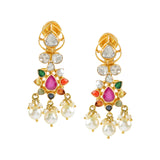
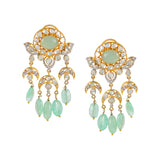
Shoppers often use "kundan" and "polki" interchangeably because the two crafts look similar and frequently appear in the same bridal set. Technically, they answer two different questions: polki tells you what the stone is (a raw, natural diamond), and kundan tells you how a stone is held (wrapped in strips of highly refined gold, worked cold without solder or prongs). Understanding this distinction is the single most important step in judging quality — and price — correctly.
"They have a non-faceted surface, and are generally cut to follow the original structure of the stone." — Sunita Shekhawat, Jaipur-based fine jeweller, on polki diamonds, quoted by the Natural Diamond Council
 Polki
Polki Kundan
| Quality marker | Polki | Kundan |
|---|---|---|
| What it actually is | A natural diamond left uncut and unpolished, retaining its raw crystal form | A setting technique using strips of highly refined (near-24K) gold worked around a stone, without solder |
| Centre stone | Real uncut diamond — no two stones are alike | Usually glass, quartz, or coloured gemstones; diamonds only in polki-kundan hybrids |
| Stone grading | Graded by transparency and inclusions — top-tier "Syndicate" polki is near-colourless with few inclusions; "Kilwas" polki shows more inclusions and costs less | No diamond grading applies; quality rests on gold purity, foil work, and stone-setting precision |
| Sparkle character | Soft, deep, watery glow from the foil-backed raw diamond | Bright surface shine from polished glass/gems and gold foil |
| Craftsmanship test | Evenness of the foil back, secure jadau (lac) setting, fine meenakari on the reverse | Uniform, unbroken gold-foil borders; smooth stone seating; detailed enamel reverse |
| Certification | Should come with a natural-diamond authenticity certificate and a transparent weight breakdown (gold / polki / lac / meenakari) | Should carry BIS hallmarking for the gold and a clear disclosure of stone material |
| Price band | Premium — priced like diamond jewellery; a bridal set is typically several times the cost of a comparable kundan set | More accessible — you pay chiefly for gold weight and artisanship, not stones |
| Heirloom & resale value | High — natural diamonds plus gold retain and often appreciate in value | Moderate — value rests mainly in the gold content and craftsmanship |
| Best suited for | Bridal trousseaus, investment-grade heirlooms, milestone gifting | Festive and occasion wear, larger statement looks on a defined budget |


Choose polki when the piece is meant to be an heirloom or a bridal investment — you are buying natural diamonds whose value endures across generations. Choose kundan when you want the same regal Mughal-era aesthetic in a grand, wearable format at a friendlier price point. Many Hyderabadi brides do both: a polki bridal set for the wedding day, complemented by kundan pieces for the sangeet, reception, and festive seasons that follow.
At Krishna Jewellers Pearls & Gems — serving Hyderabad since 1983 from the historic Charminar pearl-market district — every polki piece is sold with natural-diamond certification and a transparent component-weight breakdown, and every kundan piece carries BIS-hallmarked gold. Our craftsmen work in the same jadau tradition that once served the Nizam's court.
Polki jewellery is set with natural uncut diamonds, so its quality is graded by the stone's transparency and inclusions (Syndicate grade being the finest). Kundan is a 24K gold-foil setting technique usually holding glass or gemstones, so its quality is judged by gold purity, foil craftsmanship, and meenakari detail. Polki therefore costs more and holds higher resale value; kundan offers the same royal aesthetic at a more accessible price.
Yes. Because polki uses real, natural uncut diamonds, a polki set is typically several times the price of a visually similar kundan set, where the cost lies mainly in gold weight and artisanship rather than stones.
Traditionally, no — kundan settings most often hold shaped glass or coloured gemstones. When a kundan-set piece contains uncut diamonds, it is properly called polki (or polki-jadau) jewellery.
Polki holds value better because natural diamonds and gold both retain intrinsic worth and are prized as heirlooms. Kundan's resale value comes primarily from its gold content, so it is best bought for its beauty and craftsmanship rather than as an investment.
Look for an uneven, natural glow rather than uniform shine, ask for the polki grade (Syndicate or Kilwas), request a natural-diamond certificate from an independent gemmological lab, and insist on an itemised weight breakdown separating gold, polki, lac, and meenakari.
Compare certified polki and hallmarked kundan side by side at any of our seven showrooms across Hyderabad, or book a live video consultation with our heritage jewellery specialists.
Chat with us on WhatsApp
