
Cart
0
You may also like
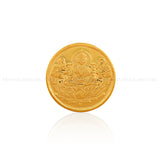
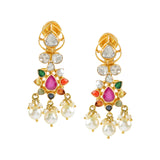
Every South Indian bride reaches this crossroads: the jeweller lays out a guttapusalu haram shimmering with clusters of tiny pearls beside a Lakshmi kasulaperu gleaming with rows of goddess-embossed gold coins — and both feel like they were made for your wedding day. They were. But each carries a different legacy, sits differently on the body, and shines in different moments of the celebration. Here is how to choose between two of Telugu bridal jewellery's most treasured heirlooms.
Quick answer: Choose a guttapusalu haram if you want soft, romantic movement and a Nizam-era pearl heritage look that photographs beautifully against silk saree pallus. Choose a Lakshmi kasulaperu if you want bold, auspicious symbolism, a stronger gold presence, and a piece traditionally gifted as a blessing of prosperity. Many brides ultimately layer both — kasulaperu shorter, guttapusalu longer — for the complete maharani effect.
Guttapusalu takes its name from Telugu — gutta (bunch or cluster) and pusalu (beads) — describing the signature clusters of small seed pearls that hang from the necklace like bunches of grapes, or as older artisans describe it, like a school of tiny fish caught in a net. The style flourished in the courts of the Deccan, where Hyderabad's pearl trade under the Nizams supplied the fine Basra and later cultured pearls that define the look.
A traditional guttapusalu haram is built on a gold base — often worked with kundan, polkis, rubies, or emeralds at the centre — with dense pearl fringes cascading from every element. The result is a piece that never sits still: it sways, catches light, and softens the face. It is unapologetically ornate yet feminine, which is why it remains the definitive Telugu and Kanjeevaram bridal necklace.
Kasulaperu translates literally as a string of coins — kasu (coin) and peru (string or chain). Each gold coin is embossed with the image of Goddess Lakshmi, the bestower of wealth and wellbeing, making the necklace as much a blessing as an ornament. Historically, families strung real gold coins together as portable wealth for a daughter entering her new home; the kasulaperu is jewellery with the memory of a dowry chest built into it.
Modern kasulaperu designs range from a single elegant row of coins on a woven gold chain to grand multi-row harams anchored by a Lakshmi pendant set with rubies or emeralds. Compared to the guttapusalu's shimmer-and-sway, the kasulaperu reads as solid, architectural, and unmistakably auspicious — the necklace elders touch with reverence when it comes out of the locker.
| Feature | Guttapusalu Haram | Lakshmi Kasulaperu |
|---|---|---|
| Signature element | Clusters of small pearls fringing a gold and gemstone base | Gold coins embossed with Goddess Lakshmi |
| Heritage | Deccan/Nizam-era Hyderabad pearl tradition | Ancient coin-necklace tradition; symbol of wealth passed to the bride |
| Visual character | Soft, romantic, constantly in motion | Bold, structured, regal |
| Symbolism | Purity and abundance of pearls | Lakshmi's blessing — prosperity and auspicious beginnings |
| Typical stones | Pearls with rubies, emeralds, polki or kundan work | Primarily gold; pendant often set with rubies and emeralds |
| Weight & value | Higher gross weight, but pearls and stones make up much of it — gold content is lower relative to size | Almost entirely gold by weight — value is concentrated in the coins themselves |
| Best worn with | Kanjeevaram and rich silk sarees; muhurtam and reception looks | Temple-style silk sarees; muhurtam, gruhapravesham, festivals |
| Occasion range after wedding | Receptions, sangeets, grand family functions | Festivals like Varalakshmi Vratam, Diwali, temple visits, anniversaries |
| Heirloom value | Prized for artistry and pearl work | Prized for gold content and religious significance |
Descriptions only go so far — here are the two styles side by side from the Krishna Jewellers bridal collection, so you can see exactly what each choice looks like.

Everything the guttapusalu tradition promises in one piece: a richly worked 22K gold base set with kundan and ruby-red accents, a Goddess Lakshmi centrepiece, and that unmistakable cascade — dense clusters of seed pearls threaded with soft emerald-green beads that ripple with every movement. The pearl and stone work nearly doubles the necklace's visual volume over its gold frame.
Purity: 22K • Gross weight: 271.60 g • Net gold: 177.42 g • Pearls: 287.20 • Stones: 154.52

The kasulaperu at its most regal: continuous rows of intricately embossed Lakshmi coins in a warm antique matte finish, anchored by a grand temple-style pendant of the Goddess finished with a bunch of pearl drops. Almost every gram here is gold — the coins themselves carry the necklace's weight, presence, and blessing.
Purity: 22K • Gross weight: 160.02 g • Net gold: 159.39 g
Put these two side by side and the choice becomes wonderfully concrete. The guttapusalu carries around 177 grams of gold but wears far larger — its pearls and stones build volume, texture, and colour that gold weight alone cannot buy. The kasulaperu is almost pure gold by weight (159 of its 160 grams), so its value is transparent and its look is uniformly rich rather than layered. In other words: the guttapusalu spends its budget on artistry and materials working together; the kasulaperu concentrates it into gold and symbolism. Both are priced on request against the day's gold rate — message us on WhatsApp with the SKU for a live price breakup.
A heavily zari-worked Kanjeevaram with a busy border pairs beautifully with the guttapusalu, whose pearl fringe adds texture without competing in colour. If your saree features temple motifs — gopurams, peacocks, deities woven into the border — the kasulaperu echoes that iconography and creates a unified temple-jewellery story.
For the muhurtam, when tradition and blessing take centre stage, elders often favour the kasulaperu for its sacred Lakshmi imagery. For the reception, where movement, photographs, and drama rule, the guttapusalu's swaying pearls are unmatched under stage lighting.
Be honest about life after the wedding. A single-row kasulaperu transitions effortlessly to festival wear and even elevated office-party styling with a silk kurta. A full guttapusalu haram is occasion jewellery — spectacular, but reserved for grand events. If you want one necklace that keeps working for decades of Varalakshmi Vratams and family weddings, the kasulaperu edges ahead.
The guttapusalu's cascading fringe elongates and flatters rounder faces and broader shoulders. The kasulaperu's horizontal coin rows add presence and width, which beautifully balances longer face shapes and slender frames. Worn at haram length, both suit deep-neck blouses; at choker-to-princess length, the kasulaperu sits neatly above most bridal blouse necklines.
Both are heirlooms, but they age differently. The kasulaperu's value lives in its gold weight and its blessing — it is the necklace grandmothers gift at gruhapravesham. The guttapusalu's value lives in its craftsmanship; a finely made piece with well-matched pearls becomes rarer every year as fewer artisans master the technique.
Not only can you — for a full Telugu bridal look, you are almost expected to. The classic layering formula places the kasulaperu at a shorter length, close to the collarbone where the Lakshmi coins are clearly visible, with the guttapusalu haram falling below it in a longer sweep. The structured coins and the fluid pearl clusters contrast rather than clash, and together they frame a heavy pendant or a third short choker if your look calls for it. If you are commissioning both, ask your jeweller to plan the lengths together so neither piece hides the other.
There is no losing choice here — only a question of what your wedding day should say. If your heart is set on romance, movement, and Hyderabad's pearl legacy, the guttapusalu haram wins. If you want gravitas, divine blessing, and a piece you will wear for every festival to come, the Lakshmi kasulaperu wins. And if the budget allows, the true winner is the bride who layers both — as generations of Telugu brides have done before her.
It depends on gold weight and workmanship rather than the style itself. A kasulaperu's cost is driven mostly by its gold coin weight, making pricing straightforward. A guttapusalu's cost depends heavily on pearl quality, gemstone setting, and the intricacy of the fringe work, so two similar-looking pieces can differ significantly. Ask your jeweller for a breakdown of gold weight, stone value, and making charges for both.
A grand guttapusalu haram is primarily bridal and occasion wear, but lighter contemporary versions — shorter lengths with smaller pearl clusters — are increasingly worn at receptions, festivals, and family celebrations.
Each coin bears the image of Goddess Lakshmi, invoking her blessing of prosperity for the bride and her new household. Traditionally, the necklace also represented tangible wealth given to a daughter, making it both sacred ornament and financial security.
Pearls are delicate: wear the haram after applying perfume and makeup, wipe it with a soft dry cloth after use, and store it flat in a soft pouch away from other jewellery that could scratch the pearls. Avoid moisture and chemical cleaners entirely — bring it to your jeweller for professional cleaning.
Yes. Many families in the UK, US, and UAE finalise their bridal guttapusalu or kasulaperu over a video consultation, viewing pieces live from the showroom before purchase, with secure insured shipping or family pickup in Hyderabad.
Explore handcrafted guttapusalu harams and Lakshmi kasulaperu necklaces at Krishna Jewellers Pearls & Gems — trusted by brides since 1983. Book a video consultation from anywhere in the world.
Chat With Our Bridal Experts
